
Standard depreciation schedules treat a coastal quarry excavator the same as an inland civil works machine. Both show 8,000 hours and six years of service, but salt corrosion, abrasive dust, and shock loading create condition gaps that age-based models cannot capture. This valuation blind spot exposes asset managers to balance sheet risk, insurance disputes, and financing surprises.
The Asset Manager’s Impossible Triangle
Financial controllers face three competing pressures that standard depreciation cannot resolve:
Balance sheet integrity demands book values that survive audit scrutiny and impairment testing. Risk transfer accuracy requires declared values for insurance and collateral values for lenders that reflect true market conditions. Commercial timing depends on knowing when repair costs exceed residual value, when refinancing windows are closing, and when disposal timing maximizes recovery.
The problem intensifies in growth markets where equipment faces harder duty cycles. Industrial expansion across emerging economies—highlighted at events like the Manufacturing Indaba 2026—drives utilization up and maintenance discipline down. Age-based depreciation assumes controlled conditions that rarely exist in practice.
Here’s the core tension: book value follows time; market value follows use intensity and environmental stress. The longer these diverge, the more expensive the eventual correction becomes.
Hidden Exposure When Environment Gets Ignored
When operating conditions are excluded from valuation logic, financial consequences compound across multiple risk areas:
Insurance value clarity collapses. Declared values based on book depreciation create claim-stage dispute risk. Over-declared sums insured inflate premiums and invite settlement friction; under-declared values cap total loss recovery. Neither reflects the machine’s actual replacement cost in its current condition.
Collateral accuracy erodes. Lenders advance against book values that ignore environment-driven wear. When refinancing requires fresh appraisals, fair market value often trails ledger value by 15-25% on machines that worked in harsh conditions. Credit committees notice these gaps.
Replacement budgeting fails. Capital planning assumes residual values that environmental stress has already destroyed. Budget shocks arrive at renewal when replacement cost assumptions meet resale reality.
Purchase decisions drift. Buyers pay advertised prices for used equipment without validating how operating history affects condition. A machine’s work environment determines its true cost per hour, not its odometer reading.
Concrete example: Two identical 36-tonne excavators, same age and hours. Unit A worked coastal aggregate operations with salt-laden air; Unit B handled inland utility trenching. Market evidence typically supports a 12-22% value differential driven by corrosion patterns, undercarriage wear, and hydraulic contamination risk—well beyond straight-line depreciation assumptions.
If you manage equipment in mining, construction, or agriculture where environmental stress accelerates wear, request a valuation evidence review to benchmark condition-adjusted fair market value against current book values.
Environment-Driven Valuation Intelligence
Disciplined asset valuation starts with quantifying operating environment impact rather than guessing at condition effects:
Build the environmental duty profile. Temperature extremes, altitude, humidity and salt exposure, dust composition, ground conditions, and grade severity all affect component life. Duty cycle intensity—load factors, shock exposure, auxiliary system demand, idle time ratios—determines stress accumulation beyond simple hour meters.
Document maintenance discipline. Interval adherence, oil analysis trends, component rebuild quality, and parts provenance create condition evidence that age-based models cannot capture. Operator behavior tracked through telematics—overspeed events, temperature excursions, over-rev incidents—provides wear acceleration data.
Calibrate environmental duty index (EDI). Convert calendar hours to environment-adjusted hours using defensible multipliers derived from inspection findings and comparable sales data. Harsh conditions might multiply wear rates by 1.3-1.8x depending on stress factors.
Anchor value in market evidence. Match subject machines to verified transactions from similar operating environments, not brochure specifications or cross-regional advertised prices. Produce fair market value ranges with confidence intervals suitable for audit and insurer review.
This approach delivers asset value confidence for financial reporting, insurance value clarity with defensible sums insured, and lender-ready collateral evidence that survives credit committee scrutiny.
How Environment Rewrites Value Across Sectors
Construction and Infrastructure Urban utility excavators working controlled trenching show different wear patterns than units handling river stabilization with abrasive sand and water ingress. Undercarriage life, hydraulic contamination risk, and swing bearing condition create value gaps that straight-line depreciation cannot explain. The resale value trap in earthmoving equipment demonstrates how wear destroys total cost of ownership faster than owners expect.
Mining Operations Articulated dump trucks under hard-rock rimpull versus soft overburden develop different frame fatigue, steering wear, and drivetrain stress signatures. Oil analysis iron and silicon levels predict major component intervals that calendar-based schedules miss. Mining project cycles also compress resale windows, clustering asset releases that move achieved values below advertised prices.
Agricultural Equipment Two combines working inland loamy soils versus coastal sandy fields with windborne abrasion face different rotor wear, bearing stress, and corrosion exposure. Market comparables must come from similar agronomic and climatic zones to provide valuation confidence.
Each sector requires environment-specific condition assessment and market evidence from comparable duty cycles. Generic depreciation schedules cannot capture these operational realities.
Insurance and Finance Decision Points
- Insurance renewal: Update sums insured using environment-normalized fair market value to reduce declared value risk
- Refinancing: Submit condition-based valuation evidence before audit windows open
- Disposal timing: Verify achieved price ranges from comparable environments rather than cross-regional listings
- Purchase validation: Confirm asking prices reflect operating history and current condition
For excavators, wheel loaders, haul trucks, graders, or harvesters working in corrosive, high-dust, or high-duty conditions, submit your machine type, make, model, year, hours, condition notes, location, and valuation purpose. We will return environment-adjusted market evidence and fair market value ranges suitable for audit, insurer, and lender review—before decisions become disputes.
Next step
Review the first published article
The first live markdown publish will replace this bootstrap state with the client's own governed content.
Read next
Related posts
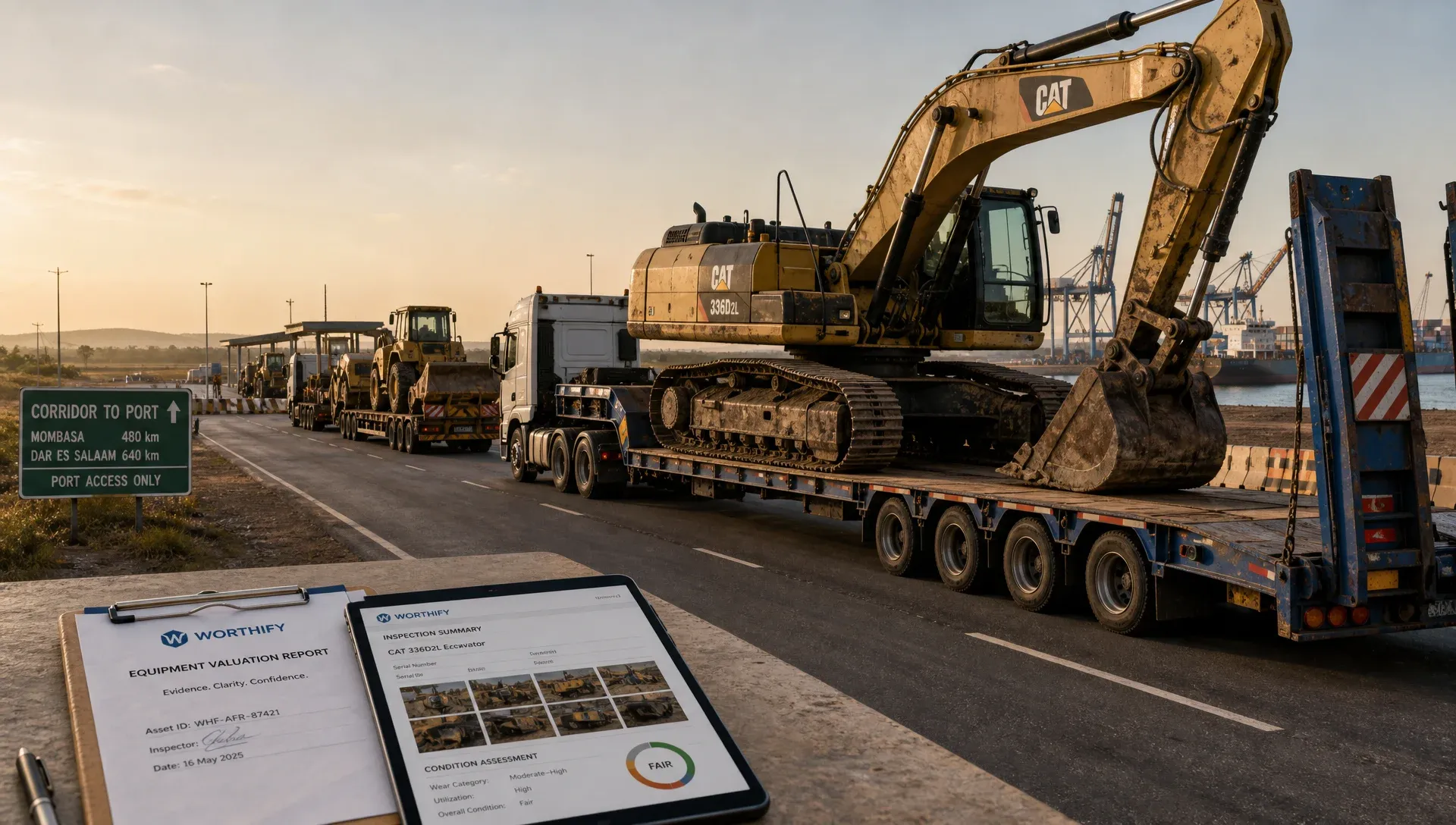
The Resale Value Trap: Why Used Earthmoving Equipment Wear Destroys Your TCO
Don't fall for the advertised price. Discover the truth about earthmoving equipment wear and its devastating impact on resale value and total cost of ownership in African corridors. Learn how to see the real numbers.